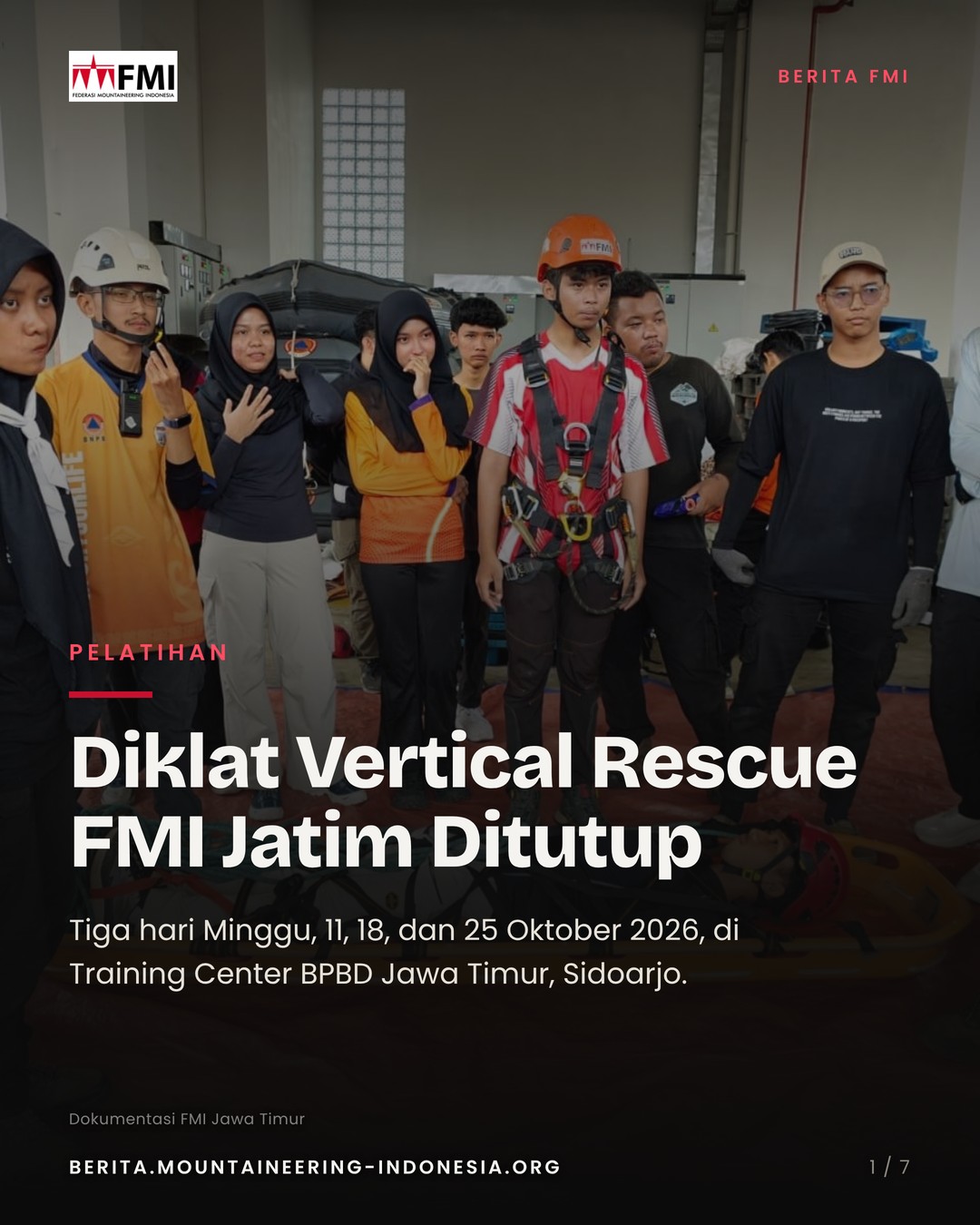
Diklat Vertical Rescue FMI Jawa Timur ditutup di Sidoarjo, Minggu (25/10/2026). Rangkaian ini berjalan tiga hari Minggu. Yang dilatih satu hal yang jarang dipraktikkan di gunung: mengeluarkan orang dari tempat yang sulit dijangkau.
The East Java chapter of the Indonesian Mountaineering Federation (FMI) closed its Vertical Rescue course in Sidoarjo on Sunday, October 25, 2026. The programme ran across three Sundays. What participants practised is something rarely drilled on mountains: getting a person out of a place that is hard to reach.
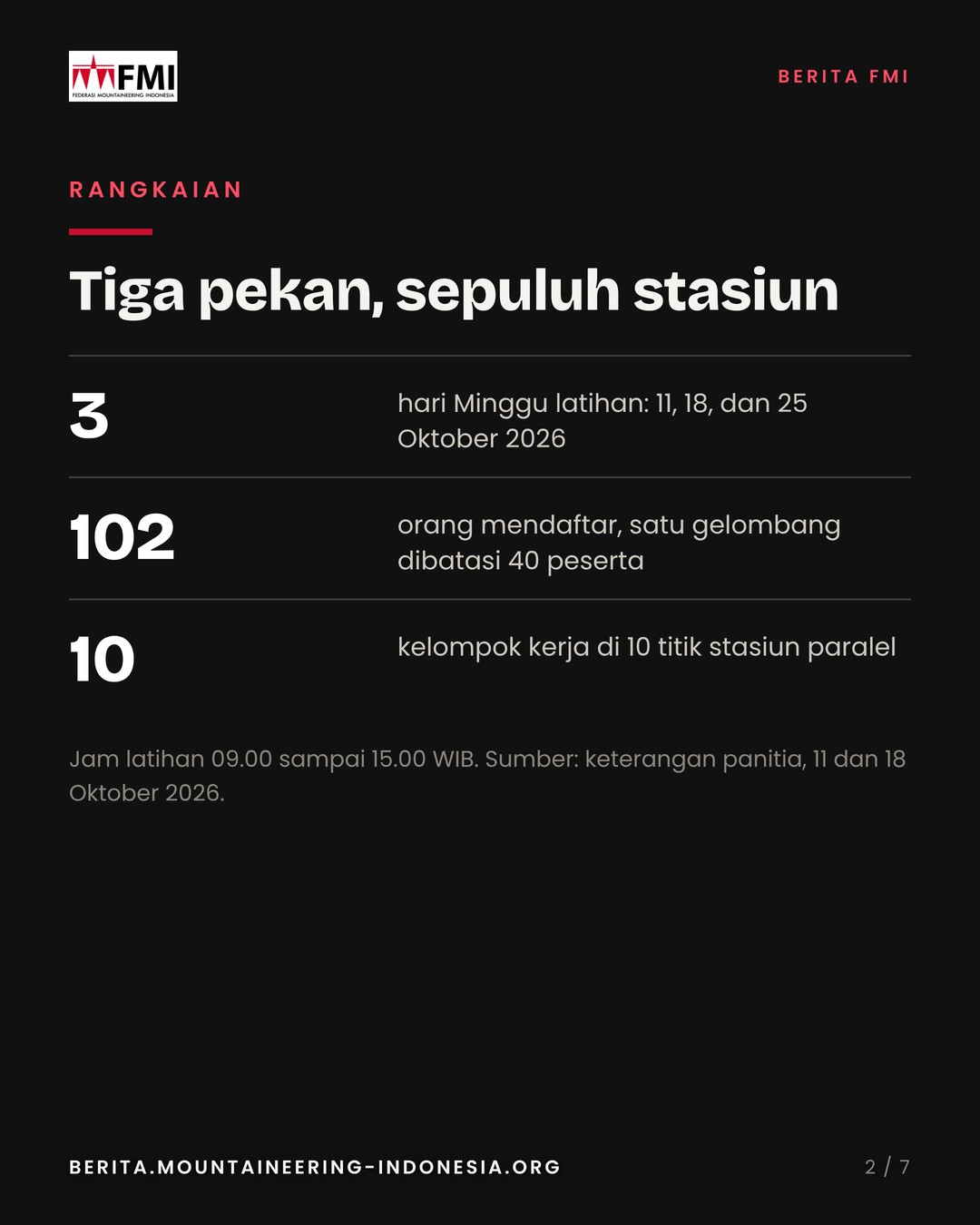
Latihan digelar 11, 18, dan 25 Oktober 2026, pukul 09.00 sampai 15.00 WIB, di Training Center Badan Penanggulangan Bencana Daerah (BPBD) Provinsi Jawa Timur. Penyelenggaranya FMI Jawa Timur lewat bidang Pendaki Reaksi Cepat (PRC). Peserta datang dari kalangan potensi SAR dan personel penyelamat gunung. Panitia mencatat 102 orang mendaftar, sedangkan satu gelombang dibatasi 40 peserta agar latihan tetap aman dan terawasi.
Sessions were held on October 11, 18, and 25, 2026, from 09.00 to 15.00 Western Indonesian Time, at the training centre of the East Java Regional Disaster Management Agency (BPBD). The course was organised by FMI East Java through its Pendaki Reaksi Cepat (PRC) unit. Participants came from search and rescue cadres and mountain rescue personnel. Organisers recorded 102 registrants, while each wave was capped at 40 people so training stayed safe and closely supervised.
Pertemuan pertama, 11 Oktober, diisi materi ruang. Peserta membahas pengetahuan dasar mountain rescue, aturan keselamatan, dan prinsip pertolongan di medan gunung. Materi dibawakan Ivan Nugroho dari Mapas Indonesia. Dewan Penasehat FMI Jawa Timur, Pudjo Suharto, membuka kegiatan dan menekankan pentingnya sinergi antarpihak serta peningkatan kompetensi teknis relawan.
The first meeting on October 11 covered classroom material. Participants studied the basics of mountain rescue, safety rules, and the principles of helping people in mountain terrain. The material was delivered by Ivan Nugroho of Mapas Indonesia. FMI East Java advisory board member Pudjo Suharto opened the programme and stressed the need for coordination between parties and stronger technical competence among volunteers.
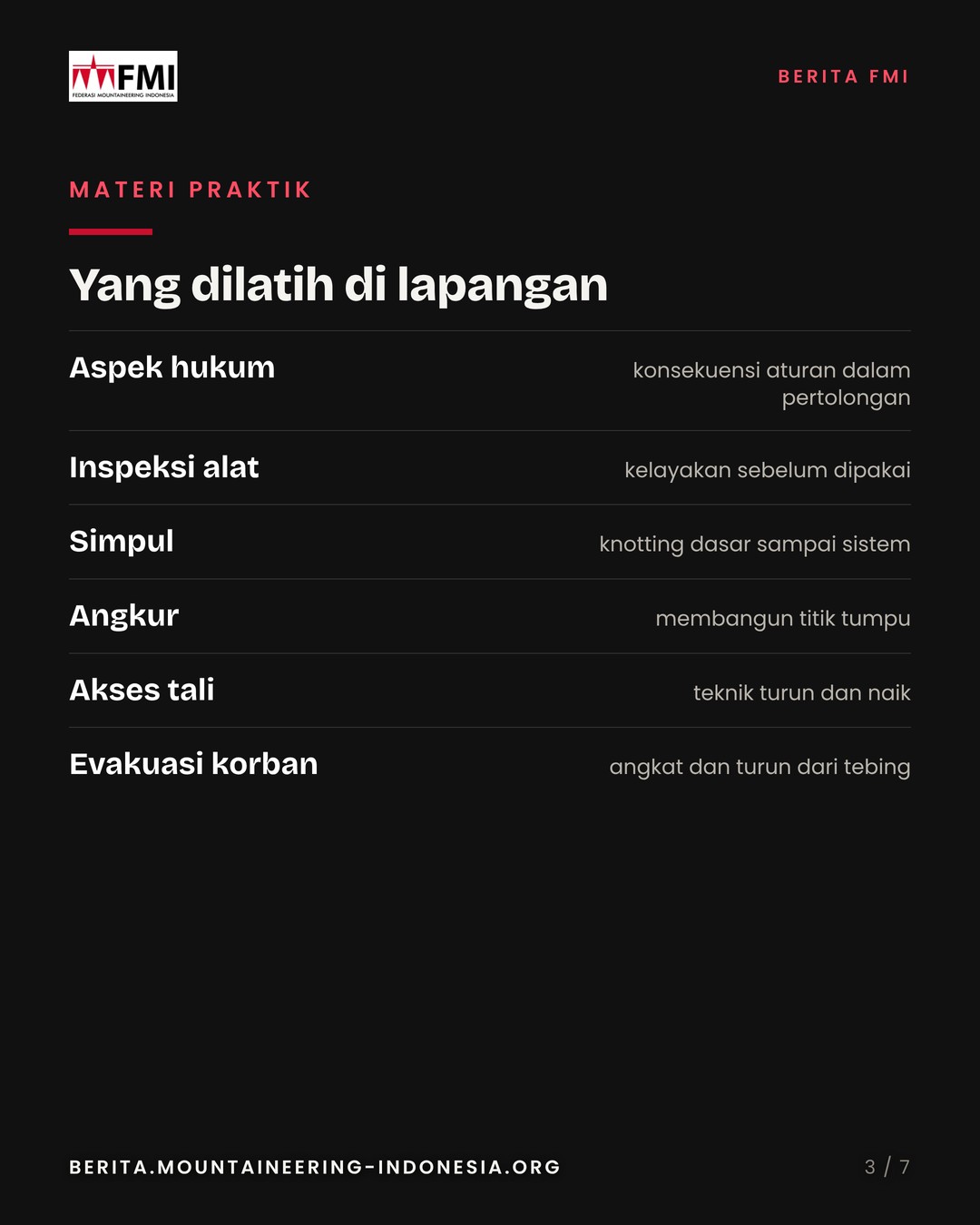
Pekan berikutnya peserta masuk ke praktik. Materinya aspek hukum, pemeriksaan kelayakan alat, simpul, pembuatan angkur, dan teknik akses tali. Ditutup dengan simulasi mengangkat dan menurunkan korban dari tebing maupun jurang. Latihan dibagi ke 10 kelompok dan 10 titik stasiun yang dikerjakan bersamaan. Setiap peserta dinilai lewat unjuk kerja, lalu hasilnya dibahas dalam debriefing.
The following week came practice. The material covered legal aspects, equipment inspection, knots, anchor building, and rope access techniques. It ended with simulations of raising and lowering a casualty from cliffs and ravines. Training was split into 10 groups working at 10 parallel stations. Every participant was assessed through a practical test, and the results were discussed in a debriefing.
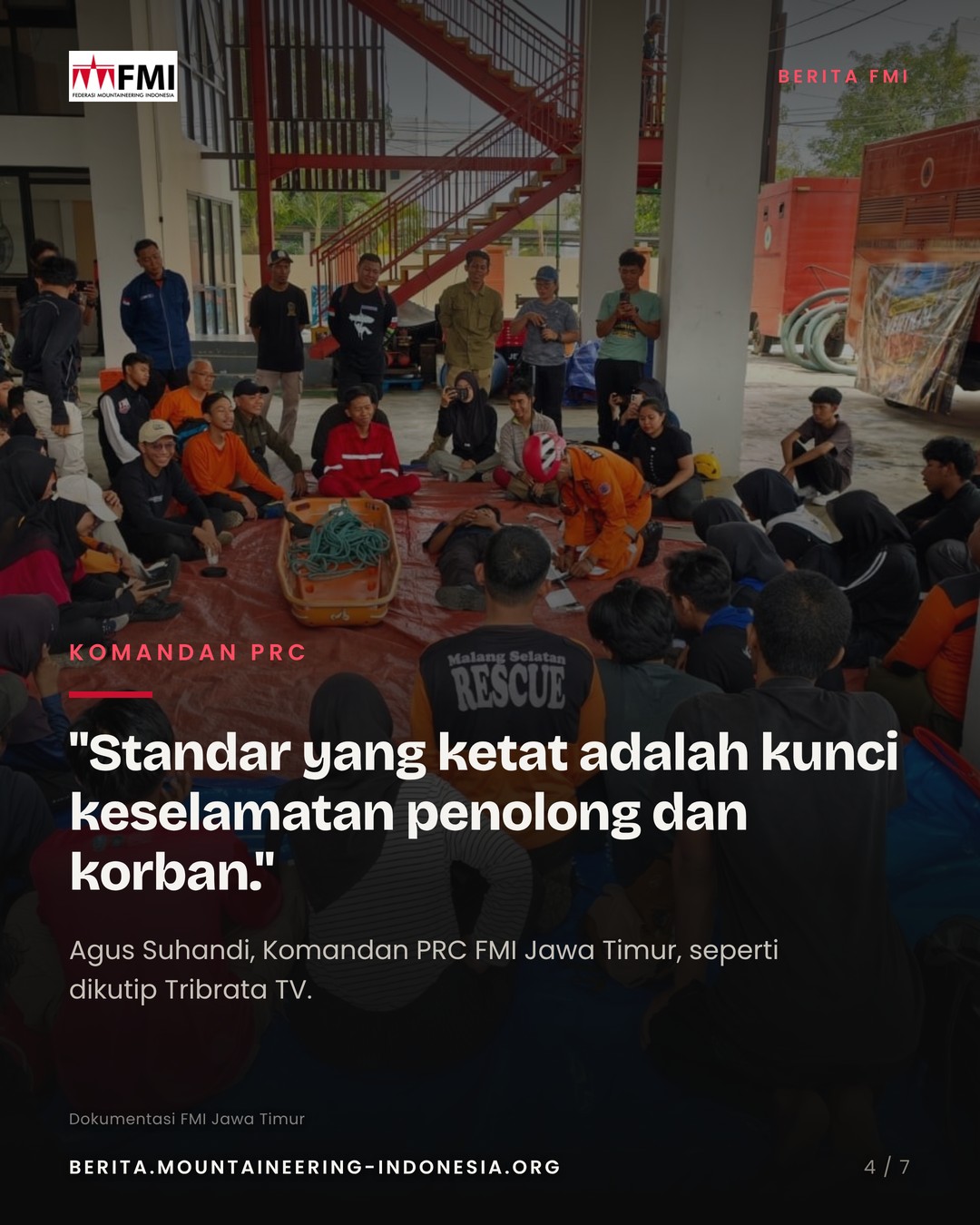
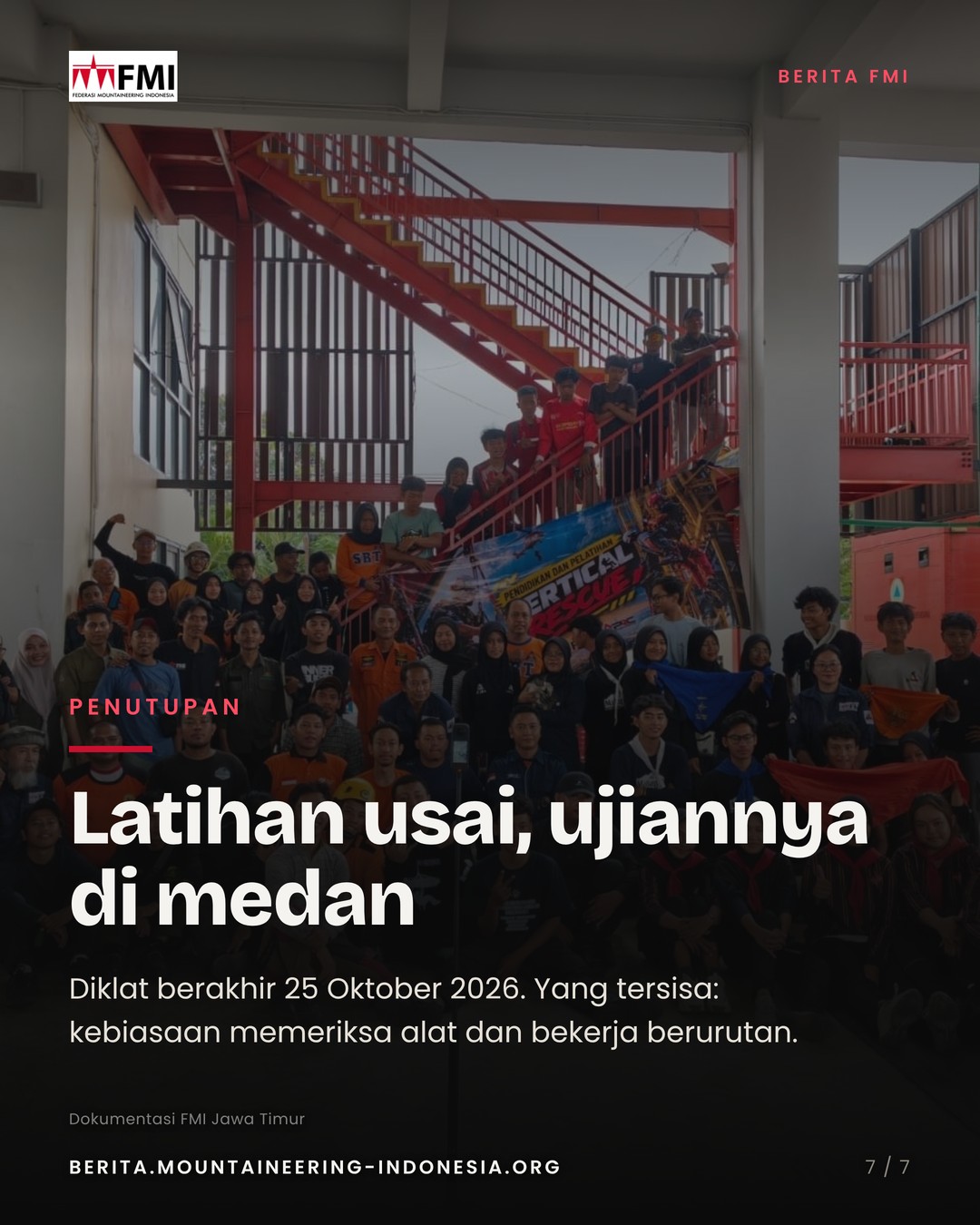
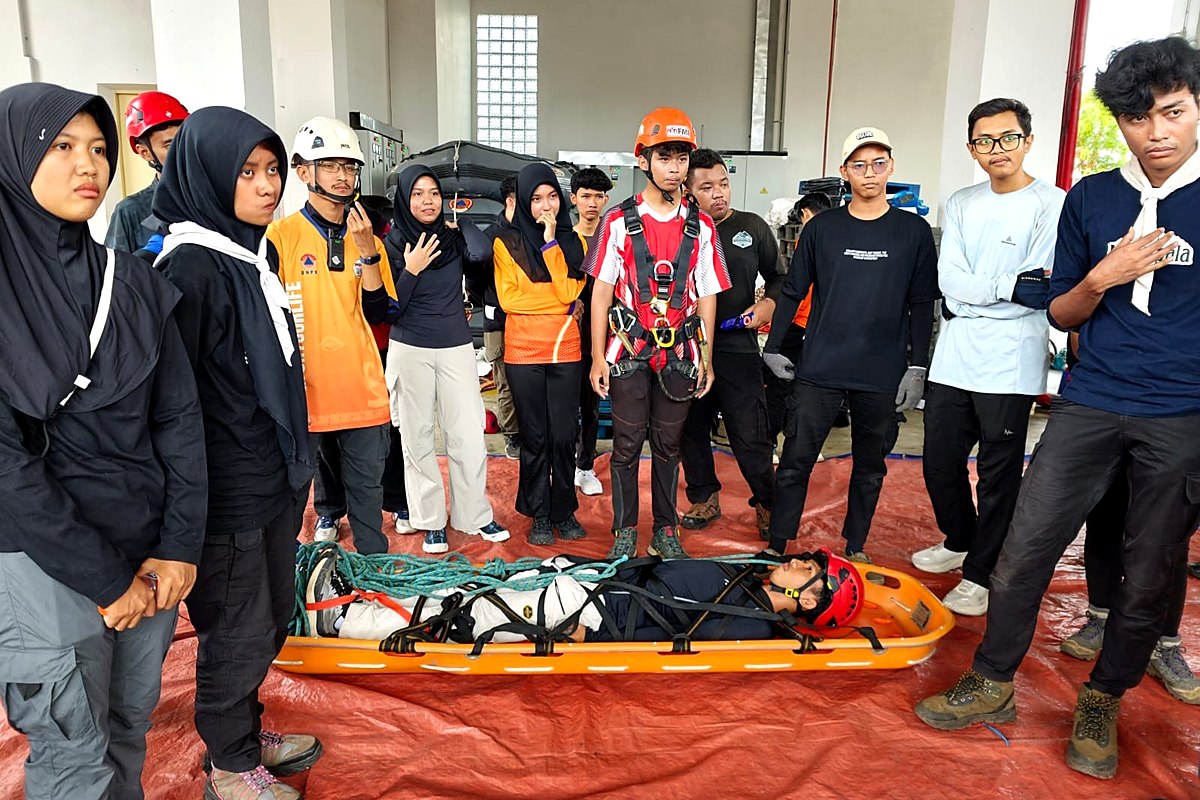
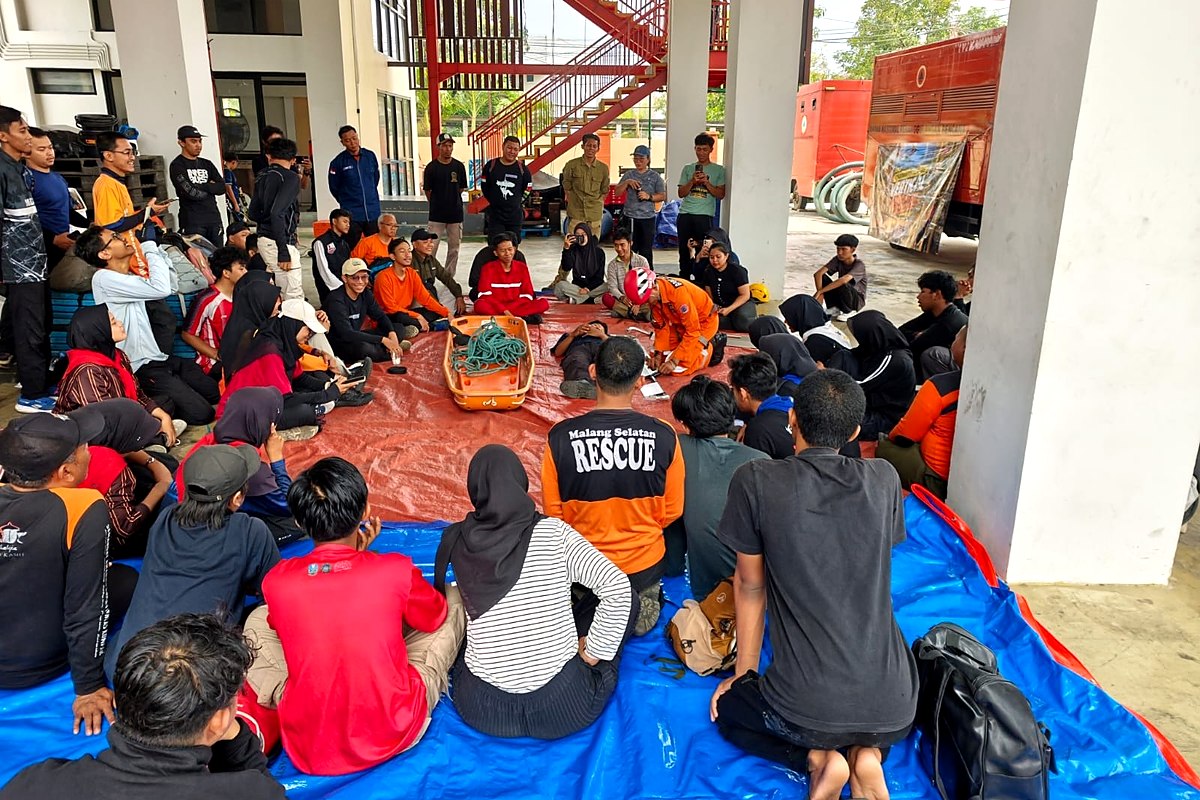
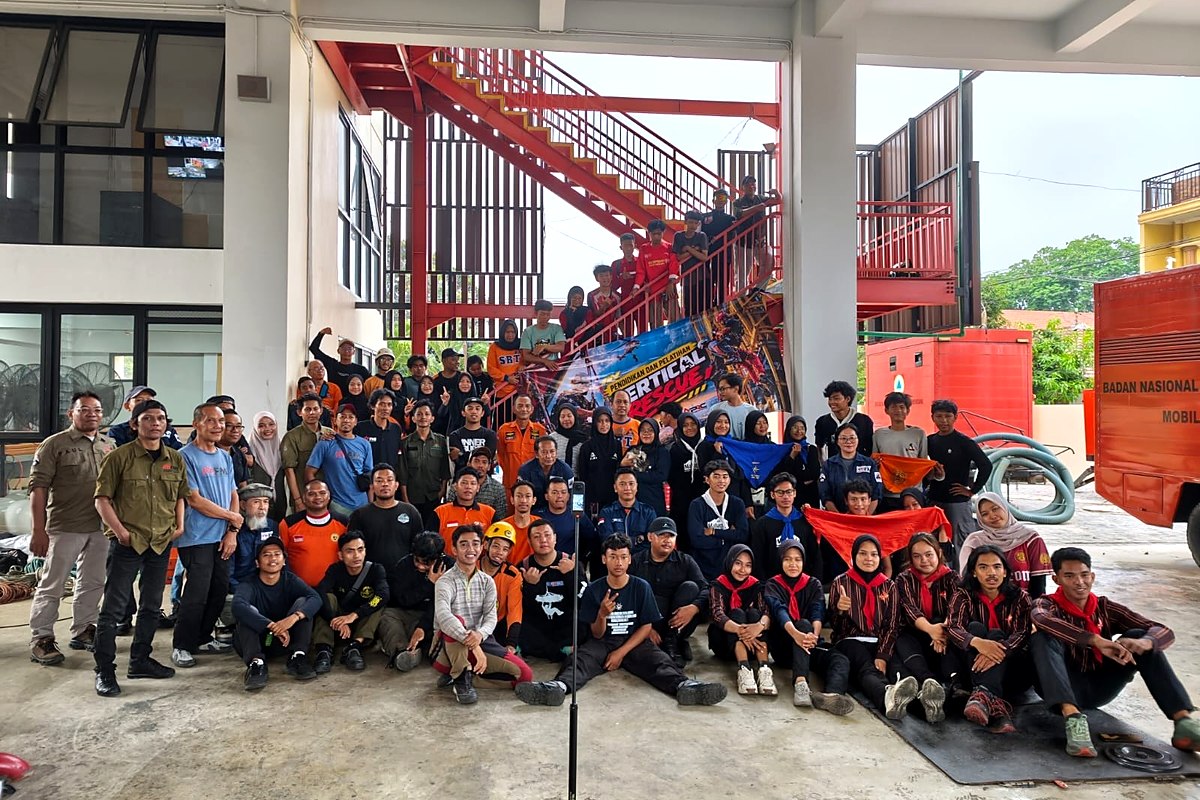
Pada 25 Oktober, rangkaian itu berakhir. Peserta berfoto bersama di depan tangga besi training center. Sebelumnya mereka masih mengulang skenario evakuasi dengan tandu di atas terpal. Satu peserta berhelm oranye berdiri di tengah lingkaran, tali dan harness terpasang, sementara korban uji dibaringkan di kerangka tandu. Di halaman, satu truk penyelamatan terparkir.
On October 25 the series ended. Participants posed for a group photo in front of the training centre's steel staircase. Before that, they ran the stretcher evacuation scenario once more on tarpaulin. One participant in an orange helmet stood in the middle of the circle, rope and harness attached, while a mock casualty lay strapped to the stretcher frame. A rescue truck was parked in the yard.
Bagi FMI, diklat ini bukan upacara seremonial. Komandan PRC, Agus Suhandi, menyebut standar yang ketat sebagai kunci keselamatan penolong dan korban. "Mulai dari inspeksi alat, teknik simpul, pembuatan angkur, hingga simulasi evakuasi korban di medan vertikal," ujarnya seperti dikutip Tribrata TV. Ketua Harian FMI Jawa Timur, Purwanto, menempatkan standarisasi sebagai fondasi. Menurut dia, sistem pencarian dan pertolongan gunung harus akuntabel dan terstruktur.
For FMI, the course was not a ceremonial event. PRC commander Agus Suhandi called tight standards the key to safety for both rescuers and casualties. "From equipment inspection, knotting and anchor building to simulating casualty evacuation on vertical terrain," he said, as quoted by Tribrata TV. FMI East Java daily chair Purwanto placed standardisation as the foundation. In his view, mountain search and rescue systems must be accountable and structured.
Rangkaian ini juga bukan titik akhir. FMI Jawa Timur menyiapkan agenda lanjutan berupa Diklat Lapangan Vertical Rescue. Agenda itu membawa peserta dari halaman latihan ke medan tebing yang sebenarnya. Pertolongan di ketinggian tidak bergantung pada keberanian. Ia bergantung pada alat yang diperiksa, simpul yang benar, dan urutan kerja yang dipahami seluruh tim. Latihan berulang seperti inilah yang membuat kemampuan itu terukur, bukan hanya diklaim.
The series is also not the end point. FMI East Java is preparing a follow-up, the Vertical Rescue Field Course. It takes participants from the training yard to real cliff terrain. Rescue at height does not rest on courage. It rests on inspected gear, correct knots, and a working sequence every team member understands. Repeated training like this is what makes the skill measurable rather than merely claimed.
Diklat Vertical Rescue FMI Jatim dalam Tujuh Slide
FMI East Java Vertical Rescue Course in Seven Slides
Versi ringkas untuk dibagikan di Instagram, dari materi yang sama dengan artikel ini.
A short version to share on Instagram, built from the same material as this article.